Personality Spectrums
What Not To Say When Your Friend Miscarries
 This is a difficult post to consider writing but one that I am convicted needs to be done. After experiencing a miscarriage years ago, witnessing family and friends lose children, and counseling other women who have suffered the same, there are common statements, meant to comfort, that burn through the heart of women. I want to share them with you now so your heart to comfort a woman can be as effective as you would love for it to be. I am writing this as a woman and will address things from a mother’s point of view. There is no mistaking that fathers grieve as well and my heart equally understands that the trauma of losing a baby reaches beyond a mother’s womb.
- “At least it happened early!” I cringe thinking of this one and how much it hurt each and every time I heard these words. I remember it like it was yesterday, each time another woman shares that someone said those words to her. A woman’s pain cannot be measured in how long she carried her baby. Her loss is in losing her child. Longevity is a measure that sooths those around her, but makes her aware that others are measuring the value of her child’s life in months. A mother simply values her child regardless of how long they lived.
- “There was probably something wrong with the fetus.” Oh, the day my ob/gyn almost lost her front teeth! Safe to say, I never walked into her office again. To a mother, her child would have had tremendous worth and brought her incredible joy, even if something was “wrong.” Again, this may sooth those around the mother, but again tells her that her baby’s worth is being measured in the health of her baby. A mother simply values her child regardless of how smart, healthy, and strong they could have been.
- “I will let you live vicariously through me!” No. A friend’s pregnancy is not the same as your own. This is not the same as sharing a sweater. You may be thrilled about carrying your child, but it doesn’t discount the pain she feels from no longer carrying her own child.
- “At least you already have a baby!” True. But not this baby. To a mother, each of her children are unique and worth as much as the one before. Mourning the loss of a child does not mean that a mother no longer is overjoyed by the child/ren she is raising. It simply means that she is quite reasonably mourning the death of her child and that is a very healthy thing for her to do.
- “Don’t worry. You can try again.” That may be true, but that does not replace this child. I need to repeat that. A new baby does not replace the previous baby. In fact, for many mothers, this can be a struggle. They may logically think, if the pregnancies are close together, “If I didn’t miscarry, I wouldn’t have had this baby,” and they will wrestle with if it is ok to be as happy with their living child. That may seem odd or unreasonable to someone who has never been through that, but it is absolutely normal for a mother to think through and even struggle with. You cannot talk her out of it. You simply need to let her work it out.
- “It was God’s Will!” Oh my sweet, sweet friends. Ouch! Do not send her a book on “How to find God’s Joy through loss,” or something of the like. I promise, it feels cruel and can make a mother quite angry at our loving God. I had a mother drive to my house, and throw a book that her well-intentioned neighbor gave her, using language of all colors to describe her feelings about this “thoughtful” gift! It crushed her and she raged inside towards God and this neighbor. Mothers need to know that God weeps with them. The Bible says to mourn with those who mourn. You may be uncomfortable cozying up and crying with your friend, but trying to discount their time to mourn is not a solution.
- “It just wasn’t time yet.” Well, it actually was. It was time. This mother carried her baby at the exact time they were meant to live. A baby showing up at the so called wrong time does not alter their value in the eyes of their mama.
- “Now you and your husband have more time just the two of you because trust me, when you have a baby….” A mother does not need to hear how much more time she will have to enjoy her husband. They were clearly already enjoying each other and were delighted to enjoy each other in a new way. Sending a message that somehow a baby would have ruined that concurrently sends a message to the couple that they were too selfish to enjoy their baby and each other, so surely death would be better. That sounds pretty harsh, right? You didn’t mean it that way? I know that. That is why I am telling you what she will hear. A mother in mourning will hear very specific undertones in what you say.
- “At least you know you CAN get pregnant now.” A mother’s pregnancy is not simply a test of maternal physical aptitude. She wanted a baby. Her baby. She didn’t just pass the pregnancy test. She lost her child.
- “You can always adopt.” I promise, she knew that before she became pregnant. Her ability to adopt was not enhanced by a miscarriage. An adopted child does not replace a miscarried or stillborn child any more than a birth child would have. A grieving mother may desperately want a child, but, for the time being, she wants this child. The mere idea of desiring a “replacement” would make her feel like a monster.
You want to offer her comfort and that is a lovely thing. Offering comfort is not the same as taking her pain away. You cannot do that. She needs support around her and willing persons to help her carry the pain. In her eyes, in her heart, in her own body, her child died. The magnitude of such a trauma is extensive. Mothers are not “out of sight, out of mind” folk. They do not find solace in never holding their baby alive. They need to know that it is as ok to mourn and weep over losing this little life that lived inside as it is to mourn and weep over losing a 1 year old or a teenager or anyone else. The time clock is up to them so don’t try to speed her along. Just carry the burden with her, with an understanding heart. Consider that her entire body, physically and emotionally is undergoing this trauma, even if she looks the same to you. If she needs to cry, let her cry. If she needs to talk about it, talk to her about it. Think before you talk, “am I about to say this to make her stop mourning? Am I about to say this because I want to feel better?” Understand that she wishes she could feel better too. Miscarriage has become a bit of a secret because we fear others responses. Let mothers know they can come out of hiding now and share their stories. Let them feel comfortable naming their babies, no matter how small. Let them chose ways to honor and mourn their child’s life and honor that with them. They may go on to see God’s goodness through their life. They may go on to have more children. They may go on to adopt. They may even want to read a book someday on finding joy in troubled times. Be the friend that was there through it all. You may need her to do that for you someday.
This is dedicated to all of you precious mothers who lost their sweet babies. As my Pastor so lovingly shared with a friend, “Heaven just got a little sweeter for you!”
We invite you to join us on Facebook https://www.facebook.com/groups/322007224621891/
Join Our Discussion on Facebook
Personality Spectrums “Who Are You?”
 Every child comes hardwired with their own personality traits. There are positive and negative sides to each trait; you can think of them as extremes. As parents we are charged with the delicate task of helping children manage those traits and more specifically those extremes. Let’s look at two basic areas now and then jot down the traits that manifest in your life to see where the positive and negatives ends of the spectrum are. To effectively discipline your child you have to know yourself and you have to know them. Differences may be striking!
The Passionate Child~ This child is incredible passionate about everything. They love deeply and injure easily. The tend to be very sensitive towards life. They will be your little cuddle bunnies and bask in your warmth. They will cry, tantrum, and rage a bit easier than the others. They also tend to love justice but have a very raw idea of what justice should entail. They tend to become lost in their anger as easy as they become lost in love. They need to learn their limits and require a lot of help refining their passions to appropriate levels. As they grow into teen years, they tend to be bullied a bit easier by others who feed off their sensitivity. They tend to not like a peer but rather LOVE the peer. They do not have many marginalized friendships but rather end up with one or two BEST friends. As adult years arrive they become less bullied and more comfortable. They still may have few friendships but they are solid friendships. They tend to be faithful to their families. They are more prone to serving others with natural empathy and have trouble understanding why others can look the other way when there is a clear need. Forgiveness is a constant struggle because hurts are felt at a deep level. They love so much it hurts at times and they make a refuge for other hurting people.
The Perfect Child~ This child is the apparent natural at everything they do. They are not just good at math, they are top of their class. They are not just athletic, they are team leaders. Contrary to popular belief, this perfect child is not any more self seeking than others. They tend to lower their head after they achieve something instead of relish in the praise. Praise can actually make them rather uncomfortable. They work very hard to obtain a typically intrinsic standard. As they get older they tend to show off a bit more to hide their constant fear of failing. They enjoy succeeding in what they do and the outcomes (grades, scores, etc…) matter deeply to them. They tend to make casual friends easily and in great number but generally feel alone. As adults, these positives and negatives remain. They will love others but often require correction when it comes to the sympathy department. Forgiveness can often come quick for this person since hurts can typically be packaged up and dealt with, without lingering trauma.
See we all have unique personalities and as we grow older, they tend to become less extreme or at least easier to hide. Instead of the Passionate Child pitching a massive, tear-filled tantrum in front of all of their co-workers, they maintain control and may need to express it later or hold it in, if they lack an outlet. The Perfect Child may be able to received a compliment with ease as an adult, even if there are anxieties bubbling up whispering they could have done better. You cannot change who your child is. You cannot force them to be just like you. Instead, accept who they are. Never tell your Passionate Child to “not let those bullies bother you” or just “turn the other cheek” but you can teach them to journal and talk about their feelings, love others who offend them, and enjoy who they were created to be. You cannot tell your Perfect Child that “it’s just a game” or that “they can do better next time,” but you can help them appreciate the differences in others, speak kindly, and give them avenues they can feel good about.
So my questions for you…
- What kind of child are you? Passionate, perfect, funny, shy, etc…
- What do your extremes look like?
- What kind of child do you have?
- What do their extremes look like?
- What are some extremes in your home that need to be reigned in?
Join our Facebook Discussion https://www.facebook.com/groups/322007224621891/
Check Yourself
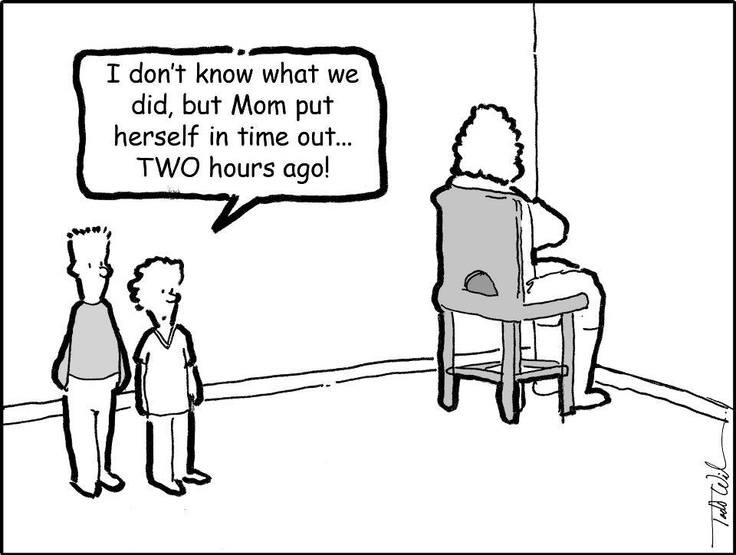
Understanding the personalities in each member of your family is essential to understanding how to discipline and have peace in the home. Notice I am not just talking about children. Understanding yourself is just as important. Are they grumpy, are you? Are they short tempered, are you? Before you say, I can’t believe they…, check yourself. Apologize. Be real.
“It is not our child’s misbehavior that makes us angry because a child’s actions cannot make you feel or do anything. You are in control of your feelings and your actions. . . Here’s an important first step to anger control: You must accept responsibility for your own anger.”
Elizabeth Pantley
The No-Cry Discipline Solution
“The child who feels right acts right”
Dr. William Sears
“The next time you feel the urge to tell your children to act their age, pay attention. They probably are.”
Jeff VanVonderen
(Families Where Grace is in Place)
Join our Facebook Discussion https://www.facebook.com/groups/322007224621891/
 Parent Blessing