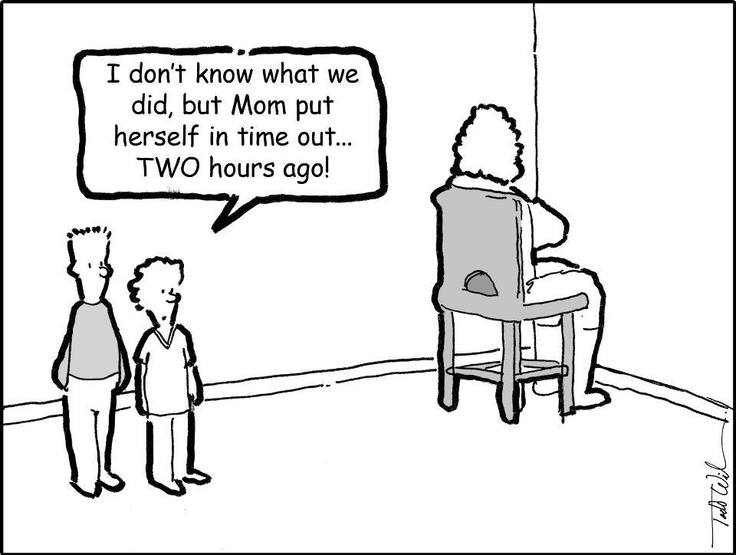
 We use time out in our family. I understand why some feel it is controversial but with some prayer and some modifications, we have felt it has been a good decision for our family. Perhaps it may be a good fit for you too! If not, no worries. Just skip to another post!
Why do we use Time Out as a discipline measure?
Well, we are convinced that it is our job to provide as many parallels to the “real world” as possible to prepare our children for their future adult lives. In the “real world,” time out is a discipline tool used all the time! Really. Think about it! You break rules and you get suspended, expelled, fired, probation, and even jail time. Time out happens and I would rather teach them to avoid it whilst they’re young, than be deduced to visiting hours only. Besides, I love them. A ton! If they need to learn something, I prefer it to be from someone who loves them! For example, if you bully in my home (refer to our bullying guidelines), you will go away (time out). I am a big believer that techniques should simulate life. You’re giving them a realistic view of their world. If you bully as an adult you could go to time out…and it will have bars! The point of a time out or a punishment is to bring that person back to the family, to join in a happy unit. It is not about you ridding yourself of some anger. The purpose is to restore and reteach.
How do we use Time Out?
We basically took everything we learned about time out and threw it out the window. We start young! I mean young! Like by 15 months. Obviously that would differ per child since development happens at different rates. We do not use a 1 minute per age rule because we believe correction should only last as long as it needs to for effectiveness and not a millisecond longer. For our littlest ones, we will do a very quick correction. Here is how it works.
Step 1- Change the Location- Quickly remove the child from their current area and bring them to a corner, wall, room, designated spot (wherever); just somewhere different from the scene of the crime. This area should be somewhere in the presence of where you will be while they are in time out. They will need to have a visual on you. I will explain more late. I don’t like to ruin surprises. This movement should be quick and unexpected. You want them thinking, “What on earth is she up to?!?” This brain trick helps them snap out of naughty mode for a brief moment and will peak their curiosity prompting at least come level of attention.
Step 2- Get down on your knees and make eye contact. “If you don’t have their eyes, you don’t have their heart!” ~Michelle Duggar
Step 3- Tell them what they did wrong. “Cupcake, you whopped sissy on her head!” Be sure your face and tone match your words. You cannot be terrified of correcting your child. It is kind. It is loving. It is sweet. It is needed! You are blessing your child, not injuring their spirits for life. Your face and tone should reflect urgency and should be firm and unpleasant because what you are saying is urgent, firm, and unpleasant. For small, squeaky sounding mamas like me, I needed to practice in a mirror. My mother, heard me mother, and let me know, in as kind of a way as possible, that I wasn’t that scary. Though scary is not our goal, being taken seriously is! I have some of the most adorable friends in the world and they sound as adorable when they correct their children. I now, if they ask for it, tell them honestly how they sound because someone was kind enough to do that for me at one point. (Thanks again Mom!) If I think you are adorable, so will your kids and therefore, they will not try to avoid correction, rather they will coerce it!
Step 4- Tell them why it was wrong. “That hurt sissy!” Again face and tone must make sense to what you are saying. Try this checklist if you struggle or don’t know if you struggle in this area. Parent Correction Checklist
(You may should shorten or lengthen the dialogue in correlation to your child’s mental capacity)
Step 5- Tell them their consequence. “You are in time out!”
Step 6- Set the child in time out and walk away (But not out of sight) It is important to stay close but pretend you are not watching. It helps to have super sonic parent eyes! So here is the tricky part! You are not going to set a timer. You are simply going to watch. So, steps 1-5 should all happen very quickly. By this point you should have your child’s curious attention. You have just caused an upheaval and they are now waiting, watching, and listening to see what you want. If you mosey through the steps, they likely stopped paying attention long ago. Since this happened quick, they are in the “what in the world just happened mode” and now they are trying to sort all of it out according to their abilities. For a younger child, this can be a very short amount of time before they are ready to start thinking about something else again. So you are watching for cues that your child is ready to move on. They may go from looking confused to starting to wiggle their fingers, or their little legs. You can see that they are about to get themselves out of time out. I recommend a sitting time out to buy you time. At the point they are figuring this is all nonsense, you intervene. As quickly, you go over and stand them up before they get up on their own. You want the standing up part to appear to be on your terms, not theirs. This gives you back their attention. Over time, you can lengthen your time outs, if need be, because they will have learned early on that you are in charge of when they sit and when they stand.
Confession: Thanks to this technique, I have successfully been able to enforce “Time Out,” while I am driving and they are buckled. I have told them they are in time out and, though they are already sitting and fastened in place, you will still see a visible change in their demeanor. I carry out the entire process as if we were home. Completely efficient and somewhat diabolical!
Step 7- Again, get down on your knees and make eye contact.
Step 8- Review what they did wrong. “Cupcake, you whopped sissy on her head!” Be sure your face and tone match your words.
Step 9- Review why it was wrong. “That hurt sissy!”
(You may should shorten or lengthen the dialogue in correlation to your child’s mental capacity)
Step 10- Review their consequence. “You were in time out!”
Step 11- Tell them what they cannot do. “You don’t hit!” I call this emptying their tool box. In their tool box they have a host of bad ideas/tools…like whopping sissy on the head!
Step 12- Tell then what they CAN do. I call this…you’ll never guess…FILLING the tool box. Do you and yourself a favor and don’t give your child a no, without also giving them a yes. Tell them what they CAN do. It helps the brain think on something new otherwise you shape chronic reoffenders. “You be gentle.” We have the fine job of FILLING their tool box with a series of new, positive tools. Kids at all ages need this part. We are made for action. If you just say what not to do, it is all they may think on. If you tell them what they can do, you have given them a new opportunity to succeed. IMPORTANT: This is your scene change. At this point your face should reflect a happy, pleasant smile and your voice should be sweet and friendly. Even if you are feeling angry or you are not sure they are fully getting it, you are to SHOW them what positive looks like with your face and your tone and of course, your words.
Step 13- Have them make amends. This is so crucial. Even your non-verbal’s can walk through an apology. You may say “Say sorry!” and they may reply, “baabee!” Perhaps they can only do a gentle touch on your face with your hand to assist them while you say sorry. That is your apology.
Step 14- HUGS, KISSES, FORGIVE, MOVE ON!! It is all done now. You have fully reconciled and your day is waiting so let it all go.
So now a neat trick for the time out impaired…..
This is called “The Other Time Out”
For children who are incredibly resistant because perhaps they got off on the wrong footing, I give you, The Other Time Out. Basically you do the steps. If they get to step 6 and immediately get up or offer a fight, you can give them a warning, “If you do not sit proper, I will have to bring you to the other time out!” For most, that is sufficient enough of a threat that you may regain some control. I mean, what on earth is the “other” time out anyway? Most kids chose not to risk it. But, lo and behold, some of them will. If they do not yield your warning, you will then reset to step 1, moving them to another location, referring to that new spot rather dramatically as The Other Time Out. It is just so weird, that it actually works. I will march a child clear around the globe until we have reached the point where they fully understand, I will not give up. Even the most difficult with eventually acquiesce!
Hopefully some of these tips will help you. Remember that the purpose of all discipline is to correct unpleasant behavior, not to simply let them know you are mad. Discipline is meant to extend the highest level of respect and kindness to your children. Your message to your children is that you “expect” behaviors that will help them succeed in life and that you know they are capable, lovable, and worthwhile. Lots more on this to come, but let’s take a time out, shall we?
Blessings!
Join our discussion on Facebook!! https://www.facebook.com/groups/322007224621891/
 Parent Blessing